
You’re Not Just 'Tired': Why Technique Breaks Down Late in a Race
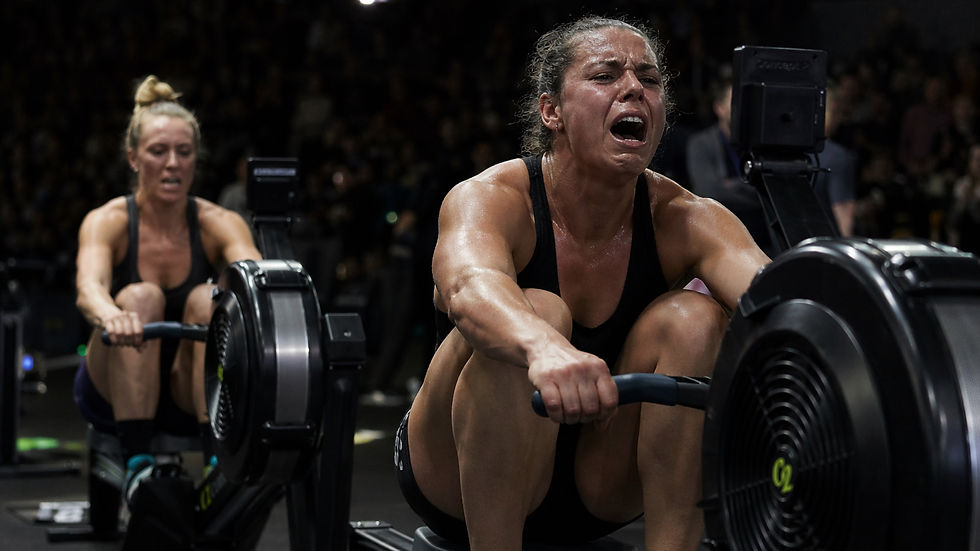
The final few hundred meters of a race feel nothing like the first half. Breathing is ragged, the legs are burning, and strokes that once felt precise begin to lose their sharpness. If your technique falls apart at the end of a race, it doesn’t mean your technique is poor.
Rowers spend countless hours refining technique in training. Yet in the closing stages of a maximal erg race, it often looks very different. Technique changes under fatigue because of what’s happening in the body. Recognising this helps athletes distinguish between genuine technical limitations and the normal effects of maximal racing.
What We See When Technique Breaks Down
Athletes may show:
slightly earlier arm engagement
reduced compression at the catch
changes in sequencing or posture
These observations often lead to criticism or concern. However, maximal racing introduces physiological demands that make perfectly maintained technique increasingly difficult.
As Olympic gold medalist Steve Redgrave has emphasised, the last part of a race isn’t about how pretty it looks. It’s about how effectively you can keep moving when everything is screaming at you to stop.
Technique in Training vs Technique in Racing
In most training sessions, athletes row at intensities where they can maintain technical precision.
At lower or moderate intensities, athletes can focus on:
clear sequencing of legs, body and arms
stable posture and connection
consistent rhythm and timing
efficient force application
Racing is different.
In short, high-intensity events like a 500m sprint or a 1k race, athletes operate close to their limits for the entire piece. Stroke rates may exceed 35-40 strokes per minute, and the effort is heavily reliant on anaerobic energy systems. The goal of racing therefore shifts from perfect technique to effective technique under fatigue.
What Is Actually Driving the Breakdown?
Short erg races place extremely high demands on the body.

Research on rowing physiology shows that:
A 2k race already derives approximately 70–75% of its energy aerobically (sustained energy production), with the remainder anaerobic (short-term, high-power output).
In shorter events like 500m and 1k, the anaerobic contribution increases substantially.
Studies measuring blood lactate following maximal rowing efforts commonly report peak values in the region of 12–18mmol/L, reflecting extremely high metabolic stress (Hagerman; Secher).
As fatigue builds, several overlapping constraints emerge:
Metabolic Fatigue
As lactate and hydrogen ions build up, muscles begin to burn and produce less force.
Breathing and Bracing
Breathing becomes increasingly laboured as the body attempts to meet demand. Many athletes begin to under-breathe late in a race, which compromises effective bracing and core stability.
Neuromuscular Fatigue
The nervous system recruits additional muscle groups to maintain output. Fine motor control begins to decline, making precise sequencing harder to sustain.
Stroke Rate Pressure
As stroke rate climbs, there is less time to organise each phase of the stroke. Small technical shortcuts begin to appear simply to keep up with the rhythm.
Cognitive Overload
Under maximal stress, focus narrows. The ability to consciously regulate technique decreases, and movement becomes more reactive than deliberate.
In the final stages of a maximal piece, athletes are operating within all of these constraints simultaneously.
Common Technical Adaptations Under Fatigue
Because of these demands, certain changes in technique are commonly observed late in races. These changes do not necessarily indicate poor technical understanding. Instead, they reflect the body’s attempt to maintain power output despite fatigue.
Many athletes tell me that they feel in control for most of a 2k, but that their technique seems to fall apart in the final 300 metres.
I see this in my own racing as well. Since having surgery on my pelvis, I’ve noticed more early arm engagement late in pieces. I know this isn’t a technical issue in isolation, but a response to fatigue, as my core and lower body tire more quickly and my body compensates.
Earlier Arm Engagement
In an ideal stroke, the legs initiate the drive while the arms remain straight until after the body swing begins. As the legs fatigue late in a race, athletes may begin to recruit the upper body slightly earlier in the stroke. This helps distribute the workload and maintain handle force when the legs can no longer produce the same output.
Reduced Slide Length
A small reduction in compression at the catch is common, with athletes not coming all the way forward and stopping short of vertical shins. Fatigue in the hip flexors and legs, combined with rising stroke rates, can lead athletes to shorten the slide to maintain rhythm. This is particularly common in sprint pieces like the 500m, where athletes may prioritise stroke rate and power delivery.
Changes in Sequencing and Posture
As physical and mental fatigue increase, sequencing becomes less precise. The stroke may look less tidy, even though the athlete is still producing significant power.
What Technical Training Is Really For
If technique changes under maximal fatigue, why spend so much time working on it? The aim of technical coaching is not perfection at all costs, but to build a stroke that remains effective and resilient under fatigue, preserving efficiency for longer.
Technical improvements help athletes:
transfer more power into the handle
reduce wasted movement
maintain effective mechanics deeper into the race
The goal is not perfect strokes indefinitely, but to extend how long an athlete can row well before fatigue takes over. In sprint events like the 500m and 1k, that extra resilience can make a meaningful difference in the final strokes.
When Breakdown Is Not a Problem
Even elite athletes experience some decline in technical precision during maximal racing. This is simply a consequence of pushing the body close to its limits.
Olympic rowing coach Mike Teti has pointed out that racing is not about perfect technique, but about how much speed you can hold when fatigue sets in.
This raises an important point. If technique looks identical at the end of a maximal race as it does in controlled training, it may suggest the athlete has not yet reached their physiological limit.
A small decline in form during the final stages of a race is often evidence of maximal effort, not failure.
The Reality of the Final Metres
The closing metres of a maximal erg race rarely look textbook. Breathing is heavy. Muscles are fatigued. Coordination becomes harder to maintain.
But those final strokes demonstrate something more important. The ability to keep producing power when everything is telling you to stop.
Technique matters enormously in rowing. But racing ultimately tests something deeper: the ability to maintain effective movement when fatigue is at its highest.
If you’re looking to improve your technique or follow a structured programme in preparation for a race, I offer options that cover both.
If you enjoyed reading this article and would like to be notified about new articles and training insights, you can sign up to my free monthly newsletter.


