
Fit, but Not Rowing Fit? Returning to Indoor Rowing

You might have spent the summer running, cycling, rowing on the water, or simply focusing on something other than the erg. You can come back with plenty of fitness and still find indoor rowing much harder than expected. That doesn’t necessarily mean you’ve lost fitness. It may just mean that the fitness you’ve built isn’t entirely specific to indoor rowing.
Fit Doesn’t Always Mean Rowing Fit
Some of that fitness will transfer. A review by Hirofumi Tanaka found that improvements in VO₂max, a measure of aerobic fitness, can carry over from one type of exercise to another. But it also concluded: “Cross-training effects never exceed those induced by the sport-specific training mode.” In simple terms, fitness carries over, but not perfectly. Training for a specific sport still matters.
Indoor rowing isn’t just a cardiovascular challenge. Every stroke asks you to produce force through the legs, body and arms in the same sequence, over and over again. That requires rowing-specific muscular endurance and the ability to maintain your rhythm and technique as you get tired.
That’s why someone can run a fast 5k, or complete a triathlon and still be surprised by how uncomfortable ten minutes on the erg feels.
Time on the RowErg doesn’t always equal rowing-specific training. CrossFit, HYROX and DEKA can all include rowing, but as one part of a broader workout. The goal is often to balance your effort on the rower with everything else you need to do, rather than produce your best possible rowing performance. You can accumulate plenty of metres without necessarily developing the same fitness you would from structured rowing sessions.
On-water rowing is much closer to indoor rowing than most other forms of training, but even that may not provide the same amount of continuous work as an erg session. Outings can be broken up by stops to turn the boat or congestion on a busy stretch of river. That can make sustained work on the erg, especially at a faster pace, feel harder than expected when you return.
Being Fit Can Catch You Out
Good general fitness can make your return to rowing harder to judge. As a session gets uncomfortable, your strokes may start to shorten, rush or become less efficient while you still feel able to continue.
Your cardiovascular fitness can let you keep pushing, even when your rowing-specific fitness and technique aren’t ready for it.
This is something I pay close attention to when coaching someone who is returning to the erg. The quality of the rowing still matters.
I would much rather see someone row a little easier at first and keep their strokes consistent and efficient than do a large amount of hard rowing while the quality of their strokes starts to decline. That doesn’t mean every stroke needs to be perfect before you train hard. It means that getting through a hard session doesn’t necessarily mean you were ready for it.
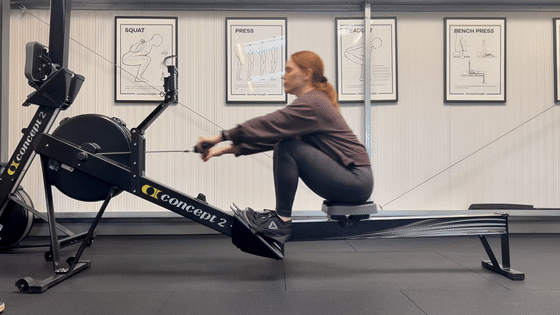
Ease Back In or Test Where You Are?
There isn’t one correct way to return to the erg. A lot depends on what you’re working towards and how soon you need to be ready for it.
If you’re rowing mainly for fitness, or you’ve given yourself plenty of time before your next competition, there is usually little reason to rush. A few weeks of mostly steady rowing can give your body time to get used to the movement again, gradually build rowing-specific volume and settle back into good technique before you start pushing harder.
That doesn’t have to mean rowing very slowly for weeks. You can still include changes in pace and stroke rate, but the overall load should give you time to rebuild rowing endurance without every session becoming a test.
If indoor racing season is approaching and you only have a couple of months to prepare, the situation is different. You need a baseline fairly early. That doesn’t necessarily mean testing on your first session back. If rowing still feels unfamiliar, a few easier sessions first can give you a more useful result.
I use benchmark tests at the start of all my training plans to establish a clear starting point and guide the training that follows. Concept2 also recommends using an initial 2k effort to help establish appropriate training and race paces.
A baseline isn’t a verdict on your fitness. It’s information you can use to train better.
Knowing where you are now makes it much easier to judge progress and make realistic decisions about what you can achieve over the weeks ahead.
Make Room for Rowing
If you’ve stayed fit through another form of training, you already have a training load. Adding rowing on top doesn’t automatically make it a better training week. It may simply make it a much bigger one.
I generally recommend three rowing sessions a week, alongside some strength training to support your rowing.
If indoor rowing is becoming the priority, you may need to reduce something else. That might mean cutting back on another type of training or simply being more selective about where you put your energy.
You don’t have to give up everything else you enjoy. But if you want your rowing fitness to improve, rowing needs enough space in your week for you to adapt to it.
Fit Is Specific
The fitness you’ve built elsewhere still gives you a head start. Now it’s time to build the rowing-specific fitness to go with it.
If you’re racing this winter, returning to the erg sooner gives you more time to build the fitness you’ll need on race day.
Get new articles by email
If you enjoyed this article, join my monthly newsletter for new rowing articles, training advice and updates.
Improve your rowing
For individual help with technique, explore my 1:1 Technique Development sessions in Ashbourne, Derbyshire, UK.
Looking to improve your performance over a specific distance? Explore my Training Plans.


